 The Blenny Guide
Quoy & Gaimard 1834

Cirri on chin but often hidden. No other cirri.
Patterns vary but 4 main morphs. One is brown and blue caudally and ventrally with a thick black stripe which goes along the entire body and caudal fin and becomes thicker caudally. The second morph is similar, but have a yellow blotch at the end of the black stripe. Another morph is entirely black, including caudal fin, but have a large blue stripe along the upper head and body and blue outer edges of the caudal fin. The last morph may have no black line, instead being blue, lighter below, with a yellow blotch along the second 1/2 midflank; there is still a thick black band in the caudal fin.
Reaches TL 11.5 cm / 4.5 in.
Reef faces, outer reef edges and surge channels.
0 - 36 m / 0 - 118 ft.
Aggressively mimics Labroides dimidiatus and nips other fish. Can be distinguished from L. dimidiatus by the position of the mouth (under the snout vs terminal seen in L. dimidiatus).
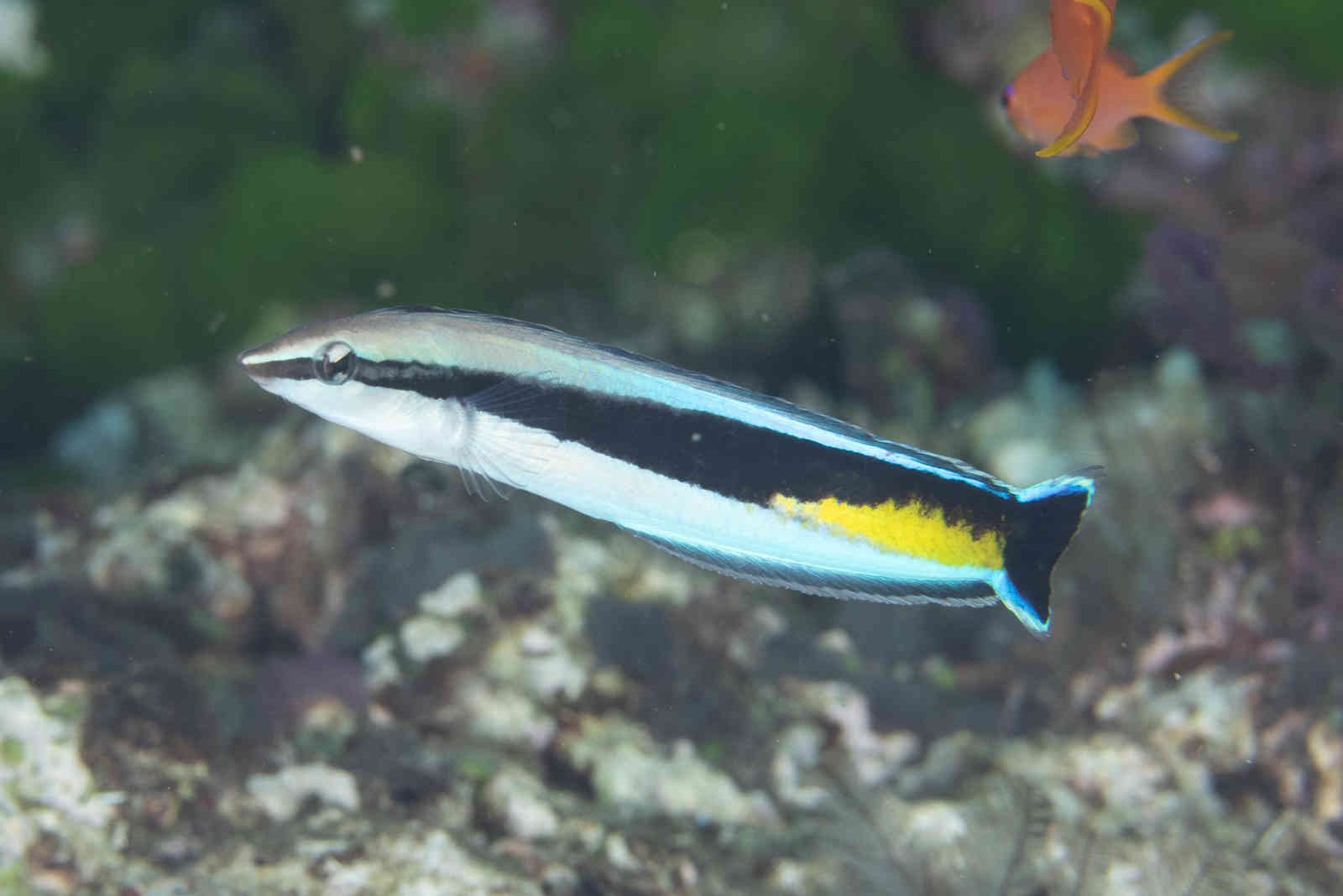

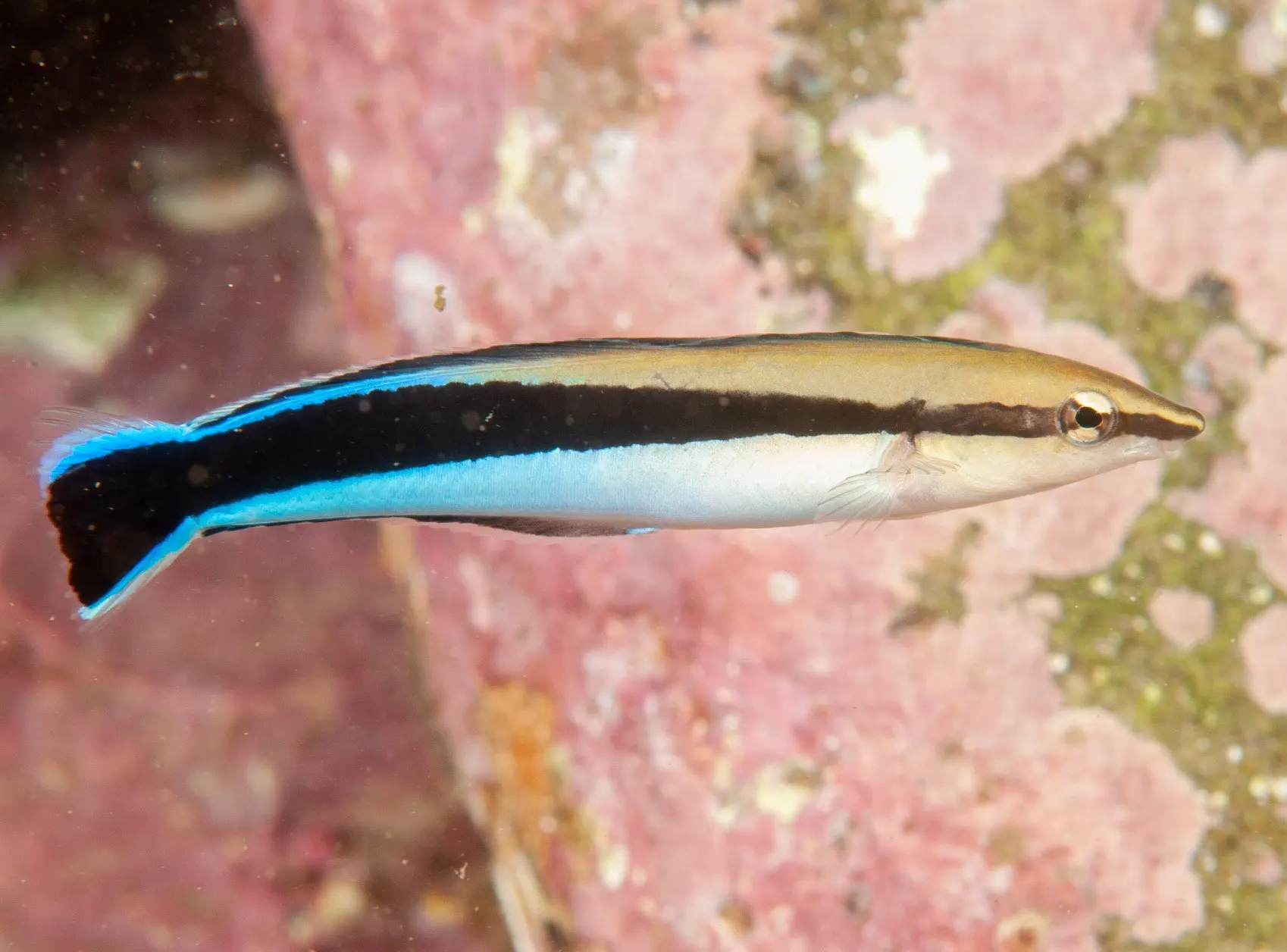
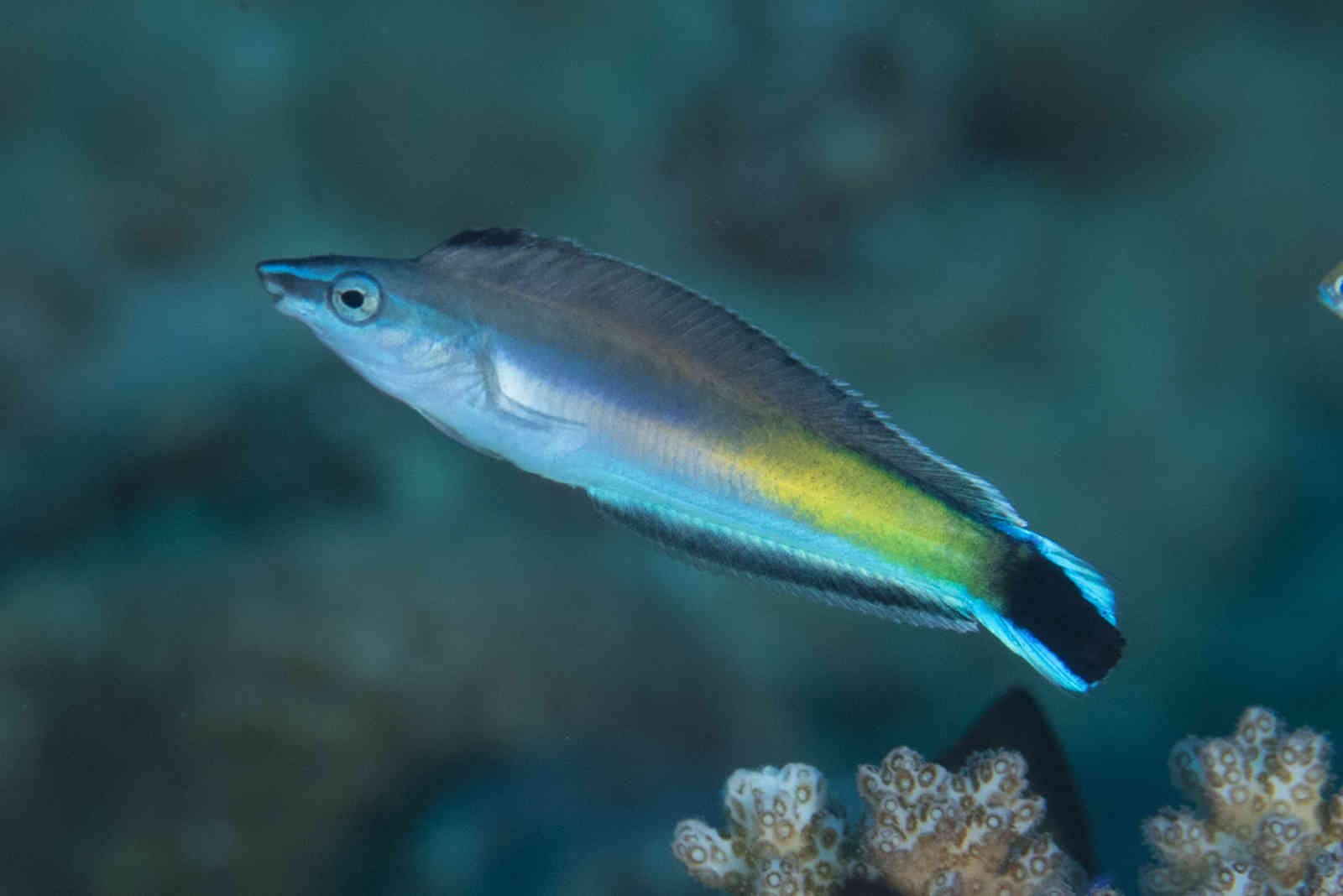
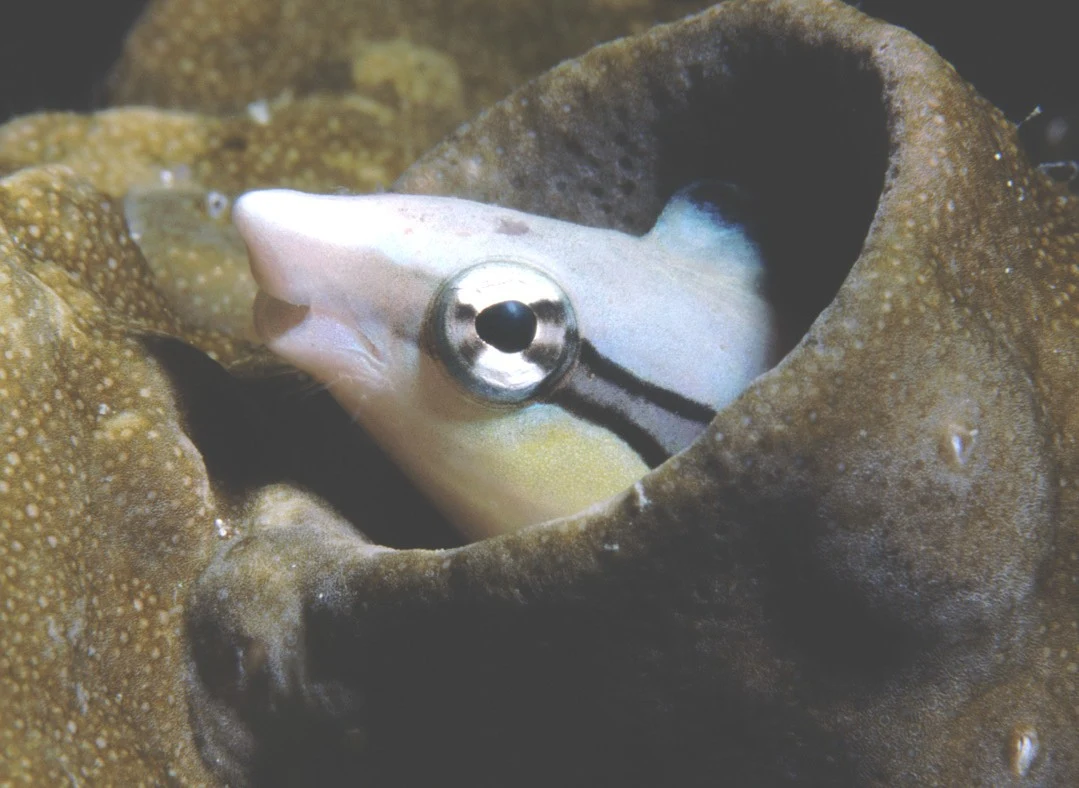
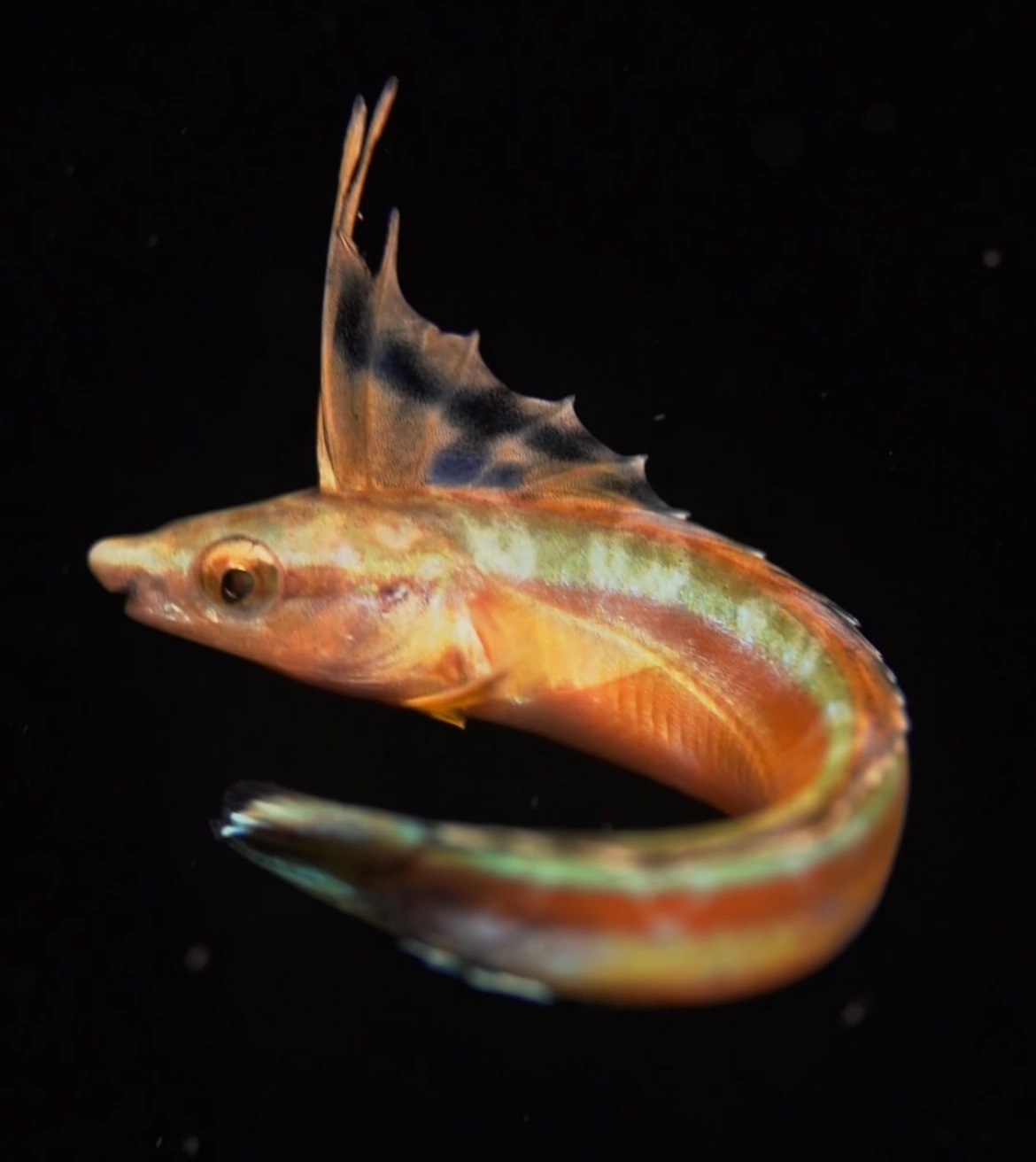
Lance Blenny
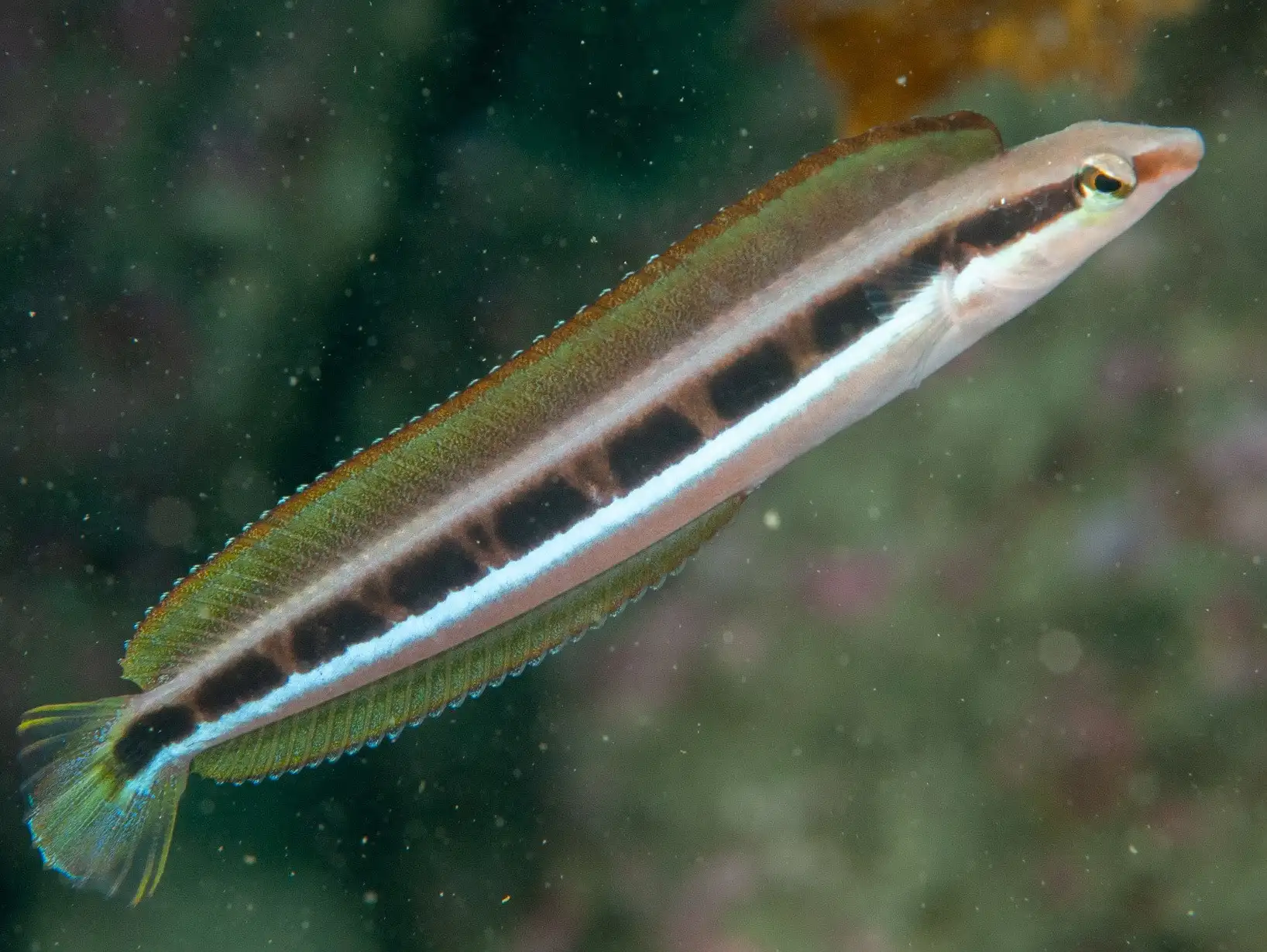
A. dussumieri nearly terminal mouth position while A. taeniatus has its mouth on the end of its snout.
No morphological information yet, data is being added...
International Union for Conservation of Nature 2014. Aspidontus taeniatus. The IUCN Red List of Threatened Species. Version 2025-2. Accessed on 29 May 2026.
https://www.iucnredlist.org/
GBIF.org (29 May 2026) GBIF Occurrence Download
https://doi.org/10.15468/dl.2dkcq9
Smithsonian Institution, National Museum of Natural History, Division of Fishes, USNM 339303 specimen record.
http://n2t.net/ark:/65665/3e567c500-e3b6-4cda-89ee-85ebecab3f1f
Smithsonian Institution, National Museum of Natural History, Division of Fishes, USNM 424522 specimen record.
http://n2t.net/ark:/65665/3eb0d3a37-029a-4383-8650-434620b575b1
Smithsonian Institution, National Museum of Natural History, Division of Fishes, USNM 446237 specimen record.
http://n2t.net/ark:/65665/3cb265091-dc40-4922-b495-89d2e1972968
Smithsonian Institution, National Museum of Natural History, Division of Fishes, USNM 357570 specimen record.
http://n2t.net/ark:/65665/3b2b9b175-1a88-407b-85d0-387e86d61aa4
Smith-Vaniz, W. F., Victor, B. C., & Allen, G. R. (2020). Aggressive mimicry in Aspidontus and Plagiotremus (Pisces: Blenniidae): some mimetic phenotypes are not phylogenetically informative. Journal of the Ocean Science Foundation, (35), 118-128.
https://doi.org/10.5281/zenodo.3979768
Randall, J. E., & Randall, H. R. (1960). Examples of mimicry and protective resemblances in tropical marine fishes. Bulletin of Marine Sciences, Volume 10(4), 444-480.
https://www.ingentaconnect.com/contentone/umrsmas/bullmar/1960/00000010/00000004/art00006